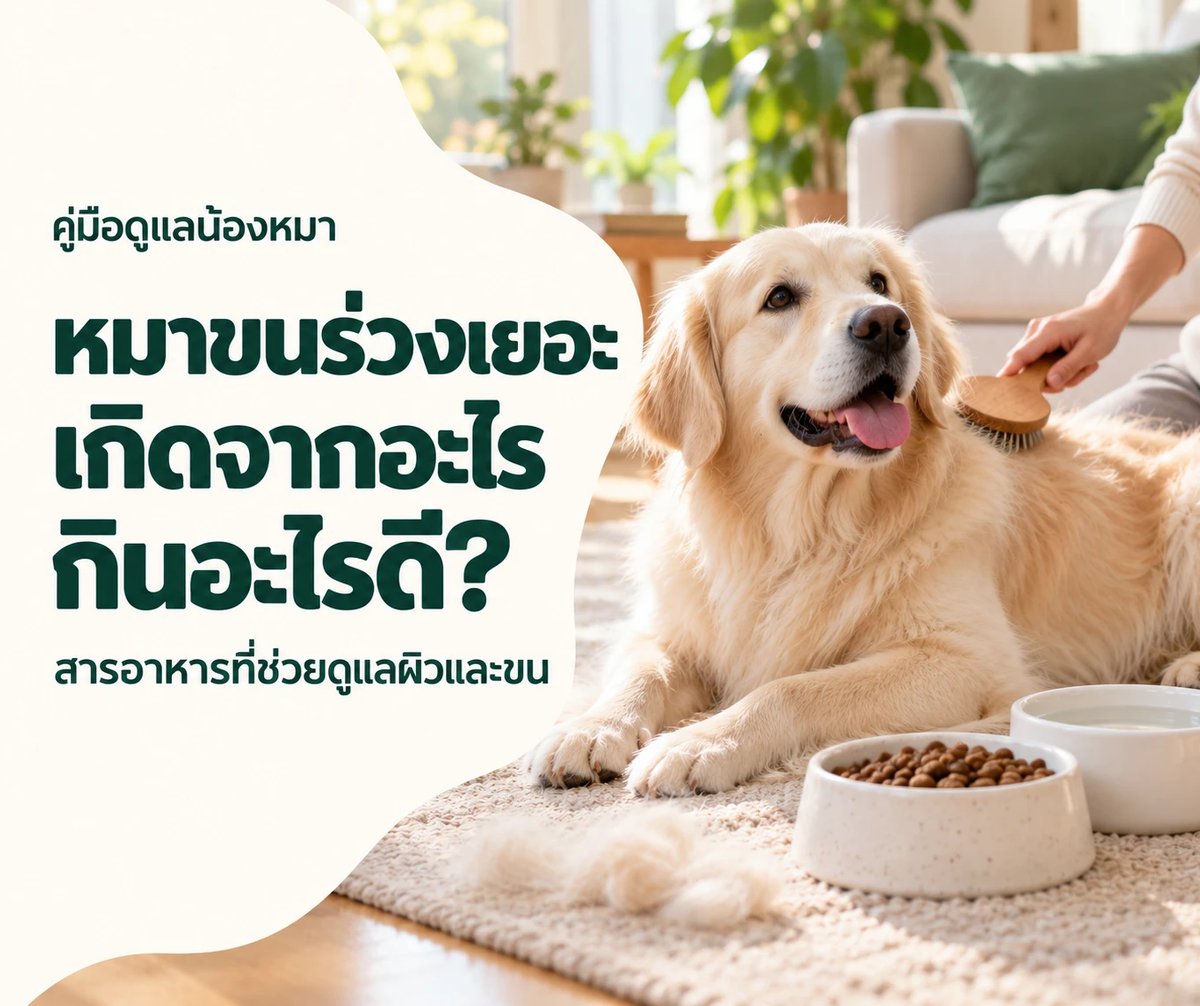
Why Is My Dog Losing So Much Hair, and What Should They Eat?
What should a dog with hair loss eat? Give a complete and balanced dog food with good-quality animal protein, omega-3 (EPA, DHA), omega-6 (linoleic acid), zinc, biotin, and vitamins A and E, plus clean water. Food helps care for the skin and coat. But if the hair loss comes from fleas, fungus, allergies or hormones, food cannot replace a check-up by your vet.
Which Hair Loss Is Normal, and Which Is Not?
All dogs shed naturally. If your dog loses hair but has no bald patches, and the coat is not thinning evenly on both sides of the body, it is usually normal shedding.
- Double-coated dogs, such as Huskies, Malamutes and Retrievers, shed heavily about twice a year. Short-haired dogs shed a little at a time all year round.
- It is not normal when the shedding leaves bald patches, or comes with itching, a rash or red skin.
What Causes Heavy Hair Loss in Dogs?
- Fleas and parasites: a dog allergic to fleas can itch for days after a single bite. The hair loss often shows from the middle of the back to the base of the tail.
- Skin infections, fungus, yeast or allergies: these make your dog itchy, and scratching and licking pull the hair out.
- Hormones: such as low thyroid, which makes hair grow back slowly, or Cushing’s disease.
- Stress, long-term illness, or after giving birth or while nursing: your dog may lose more hair.
- Nutrition: a lack of protein makes hair grow back slowly, but skin problems from missing nutrients are uncommon in dogs that eat a complete and balanced food.
What Should a Shedding Dog Eat? Which Nutrients Help the Coat?
The coat reflects what your dog eats. Poor food can make the coat dry and dull, and make it shed more.
- Good-quality animal protein: hair is almost all protein. Up to 35% of the protein your dog eats each day can go to the skin and coat.
- Omega-6 (linoleic acid): must come from food. It helps keep the skin supple. Without enough, the skin gets dry and flaky, and the coat tangles easily.
- Omega-3 (EPA, DHA): comes mainly from fish oil. It helps reduce inflammation and adds shine to the coat.
- Zinc: needed to build skin and for the immune system. Giving too much extra calcium may lead to a lack of zinc.
- Biotin and B vitamins: help linoleic acid do its job in the skin. Feeding a lot of raw egg white may cause a lack of biotin.
- Vitamins A and E: vitamin A helps skin cells grow normally. Vitamin E is an antioxidant that protects cells.
- Water: the skin helps hold in the body’s moisture. Always keep clean water available.
A complete and balanced dog food already has enough of these nutrients. If you want to add supplements, ask your dog’s vet first.
How to Switch Dog Food Without an Upset Stomach
Switch slowly over about 7 days.
| Day | Old food | New food |
|---|---|---|
| 1–2 | 75% | 25% |
| 3–4 | 50% | 50% |
| 5–6 | 25% | 75% |
| 7 | 0% | 100% |
Dogs with a sensitive stomach may need longer. If your dog vomits or has diarrhea, slow the switch down. If things still do not improve, talk to your vet.
How Often Should You Brush Your Dog? Does It Reduce Shedding?
- Brush long-haired or curly-coated dogs every day. Short-haired dogs can be brushed less often.
- Brushing removes loose hair, spreads the natural oils over the skin, and helps you spot fleas early.
- Use a shampoo made for dogs. Human shampoo, even baby shampoo, is too harsh for your dog’s skin.
Patchy Hair Loss in Dogs: When to See a Vet
- Hair falls out in patches, or thins evenly on both sides of the body
- Itching, scratching or licking themselves often
- Red, thickened or flaky skin
- A bad smell, oily skin, or a lot of dandruff
- Sores or oozing fluid
- Sudden, unusually heavy hair loss
Summary
Most hair loss in dogs is natural shedding. A complete food with good protein, omega-3 and omega-6 helps care for the skin and coat.
Brush regularly, protect your dog from fleas, and switch food gradually over 7 days.
If your dog has patchy hair loss, itching, red skin, a bad smell or sores, take them to see a vet.
Frequently Asked Questions
What should a dog with hair loss eat?
A complete and balanced food with animal protein, omega-3 and omega-6, zinc and vitamins. If the hair loss is unusual, let your vet find the cause first.
What causes heavy hair loss in dogs?
Most of the time it is normal shedding for the breed. Other causes are fleas, fungus, allergies, hormones, stress and missing nutrients.
What causes patchy hair loss in dogs?
It is usually not normal shedding. It may come from parasites, fungus, allergies or hormones, so have your vet check.
Will fish oil stop my dog from shedding?
No, because shedding is natural. Omega-3 from fish oil helps care for the skin and the shine of the coat. Ask your vet before adding it.
Read more: Why Is My Cat Shedding So Much, and How Can I Help? · Which Cat or Dog Food Brand Is Best? 7 Checks Before You Choose
References: Merck Veterinary Manual, VCA Animal Hospitals, Today’s Veterinary Practice, AKC