5 Ways to Help Your Cat Get Firm and Huggable!
How do you help your cat get firm, fluffy and extra huggable?
Ever picked up your cat and thought, “Hmm, why does my cat look a bit thin?” Or given a hug that didn’t feel as full as you expected? If so, this one’s for you! Today we’re sharing 5 ways to help your cat get nicely firm and super huggable, with a fluffy, soft, silky coat you’ll want to cuddle all day. Let’s take a look~
1. Choose a cat food that helps with healthy weight gain and coat care
Food is the main factor in helping your cat stay firm, fluffy and healthy. If you’re wondering which cat food helps cats gain weight, choose one labeled complete and balanced, with protein from meat and enough energy, such as DESERVE Holistic Grain Free, which uses Real Fresh Meat as its main ingredient. It is a source of meat protein, which cats need in high amounts. If your cat is getting thinner for no clear reason, see a vet before adding more food: losing more than 10% of normal body weight is considered significant.
📌 Our top recipes for a firm cat with a beautiful coat
🐟 Fresh Trout & Chicken – made with trout and chicken
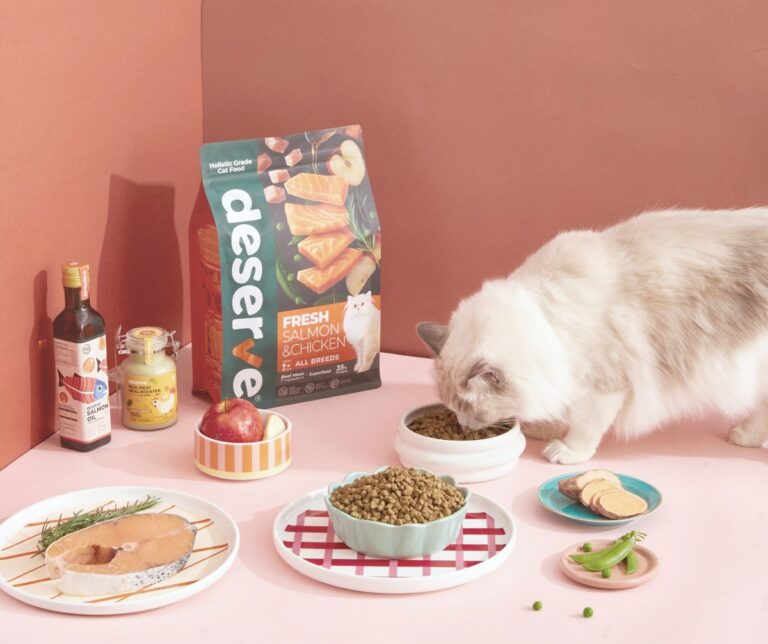
🐠 Fresh Salmon & Chicken – contains salmon oil, a source of omega-3 fatty acids
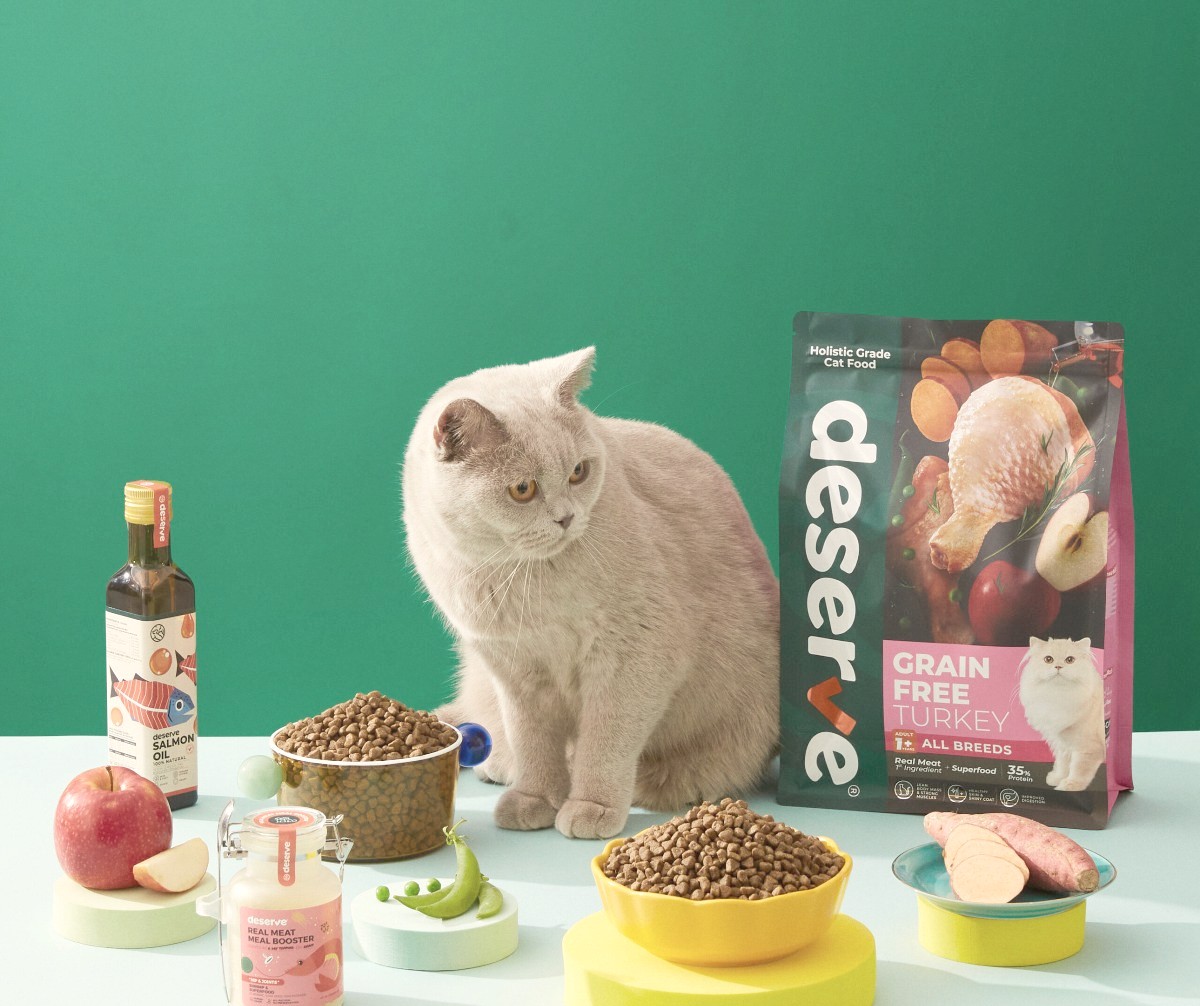
🐔 Grain Free Turkey – a grain-free recipe made with turkey
Why DESERVE for your cat?
✅ Real Meat as 1st Ingredient – high-quality meat, no by-products
✅ Superfood Blend – contains vegetables and fruits
✅ Pre & Probiotic Synergy – contains prebiotics and probiotics
✅ All Natural – no added salt, no artificial flavors or colors
✅ HACCP · GMP · ISO · formulated to AAFCO guidelines
Read more: Feeding a Spayed or Neutered Cat: How Many Grams a Day Is Right? · 6 Tips to Help Your Cat Eat Dry Food More Easily
🛒 Order Deserve products on this website, or message us on LINE @deserve.petcare
2. Set the right meal schedule
Want your cat to put on weight? Timing matters! Try splitting the daily ration into several small meals (International Cat Care suggests at least five portions a day for adult cats), in the right amount: not too much, not too little. Very thin cats may need extra food, such as wet food or treats with healthy fats.
📌 Little tips:
✔ Choose food that is high in protein with a moderate amount of fat
✔ Add wet food to some meals to boost appetite
✔ Feed at set times so your cat’s body learns a regular eating routine
✔ Avoid food that is too high in carbohydrates, as it may cause unbalanced weight gain
✔ Check your cat’s weight regularly so you can adjust portions
🕒 Suggested meal schedule for cats who need to gain weight:
- Morning (07:00–08:00): part of the daily dry-food amount + a little wet food
- Midday (12:00–13:00): a lickable cat treat or a high-protein treat
- Evening (17:00–18:00): part of the daily dry-food amount + a little wet food
- Before bed (21:00–22:00): a small dry-food meal, or a timed feeder for night portions (check the label for the total daily amount and adjust to body weight)
Caution: Don’t leave cat food out for too long, especially wet food. It may spoil and could make your cat sick.
3. Encourage exercise to build muscle
A firm cat doesn’t just mean more fat! We also need to help your cat build strong muscles, for a well-proportioned shape and good health.
🏋️♂️ Why do cats need exercise?
- Builds muscle – Cats who exercise regularly have firmer, more toned muscles than cats who rarely move.
- Boosts metabolism – Movement helps the metabolism work better, and keeps your cat active.
- Reduces stress – Play helps cats relax and reduces aggressive behavior, such as scratching or biting their humans.
- Play, then a meal – try a wand-toy session first, then offer a small meal or a few biscuits, like a natural hunt-then-eat routine.
🎾 Activities to get your cat moving
✅ Play with a wand toy – it brings out your cat’s hunting instinct, chasing “prey” just like the real thing
✅ Give moving toys – such as automatic balls or toys that make sounds to catch your cat’s interest
✅ Set up a cat tree – so your cat can climb and exercise naturally
✅ Play hide-and-seek – hide toys or treats and let your cat search for them
✅ Walk your cat for exercise – if your cat isn’t afraid of a leash, try a walk around the house or in a safe area
🕒 A good exercise schedule
- Morning (08:00–09:00): 10–15 minutes with a wand toy
- Midday (12:30–13:00): an automatic cat toy
- Evening (18:00–19:00): cat-tree climbing + hide toys to find
- Before bed (21:00–21:30): running and playing around the room
Bonus tip! Rotate toys every week so your cat doesn’t get bored and always has something exciting.
4. Add coat-nourishing food for a fluffy, soft, huggable cat
If you want your cat’s coat to be fluffy, soft and silky, don’t forget nutrition that nourishes the coat. A healthy coat doesn’t come only from baths or brushing. It starts from the inside! Choosing food with nutrients that support the coat lays the groundwork for a good-looking coat: if food lacks protein, fat or key minerals, the coat can become dry, dull or patchy.
🐟 Key nutrients for a beautiful, shiny coat
✅ Omega-3 and Omega-6 – essential fatty acids; a shortage leads to dry, scaly skin and a coat that mats easily, and omega-3s help support the skin barrier
✅ Biotin – a vitamin the body needs; cats lacking biotin can develop hair loss and scaly skin
✅ Zinc – a mineral the skin needs; a shortage can cause hair loss and thickened, cracked skin
✅ Vitamins A and E – help fight free radicals and support the skin
✅ Essential amino acids – hair is built from protein; too little protein can cause patchy hair loss or faded color
🍗 Foods that help keep a cat’s coat fluffy and soft
🐟 Sea fish such as salmon, tuna and trout – rich in omega-3 and protein
🥚 Cooked eggs – a source of protein (never raw: raw eggs contain an enzyme that can interfere with vitamin absorption, leading to skin and coat problems)
🥩 Cooked meat such as chicken and turkey – high-quality protein that helps build new hair
📌 Dry food that helps keep a cat’s coat fluffy and soft
DESERVE Holistic Grain Free – Fresh Salmon & Chicken is a great choice. It contains Salmon Oil, rich in omega-3 and 6, fatty acids the skin and coat need.
Tips!
💡 If you’d like to add salmon oil, ask your vet about the amount first, as fish oil can cause stomach upset
💡 Brush your cat every day to boost blood circulation and help spread the coat’s natural oils
💡 Choose food labeled complete and balanced, because an unbalanced diet can leave the skin and coat short of nutrients they need
5. Take your cat for regular health checks
Caring for your cat’s health isn’t only about food and exercise. “Regular health checks” matter a lot too, because cats may have hidden health problems we can’t see with the naked eye. Regular check-ups help you spot problems early and deal with them before it’s too late!
🏥 What should a cat health check cover?
✅ Body weight – your cat’s weight should be right: not too thin, not too heavy
✅ Teeth and mouth – bad breath or lots of drooling may be a sign of dental problems
✅ Coat and skin – unusual shedding, wounds or red patches may come from allergies or skin disease ✅ Eyes and ears – cloudy eyes, lots of eye discharge, or dark buildup in the ears may be a sign of infection
✅ Digestion – unusual poop, diarrhea or frequent vomiting means you should talk to a vet soon
✅ Blood tests and internal organs – as your vet advises, to check for kidney or liver disease or other chronic conditions
🐾 How often should your cat see the vet?
🔹 Young cats (under 1 year) – see the vet as scheduled for vaccines and basic check-ups
🔹 Adult cats (1–10 years) – a health check at least once a year
🔹 Senior cats (10 years and up) – a health check at least every 6 months, and more often if they have a chronic condition
🏡 Basic health care for your cat at home
💡 Watch behavior – if your cat acts differently, such as seeming dull, less playful or losing appetite, there may be a health problem
💡 Take care with food – feed nutritious food and choose a recipe that suits your cat’s health
💡 Brush regularly – to check for unusual shedding or skin wounds
💡 Check poop and pee – an unusually strong smell or odd color may be a sign of illness
💡 Encourage your cat to drink plenty of water – to support the urinary tract and kidneys
📌 Want a firmer, more huggable cat? Try DESERVE!
Frequently asked questions
Why is my cat getting thinner?
Weight loss in cats can come from disease such as diabetes, hyperthyroidism, intestinal malabsorption, prolonged vomiting or diarrhea, or cancer. If your cat loses more than 10% of normal body weight, or loses it quickly, see a vet before simply adding more food.
How many meals a day should a cat eat?
Cats suit eating little and often, so split the daily ration into several small meals rather than one big meal.
My cat didn’t finish its wet food — can I leave it out?
Leftover opened canned or pouched food should be tightly covered and refrigerated promptly, or thrown out — don’t leave it sitting in the bowl. Wash bowls with soap and hot water after each use.
How often should I take my cat for a health check?
Cats of every life stage should have a full vet exam at least once a year; senior cats at least every 6 months, and more often if they have a chronic condition.
References: VCA Animal Hospitals, International Cat Care, FDA Center for Veterinary Medicine, AAFP/AAHA Feline Life Stage Guidelines