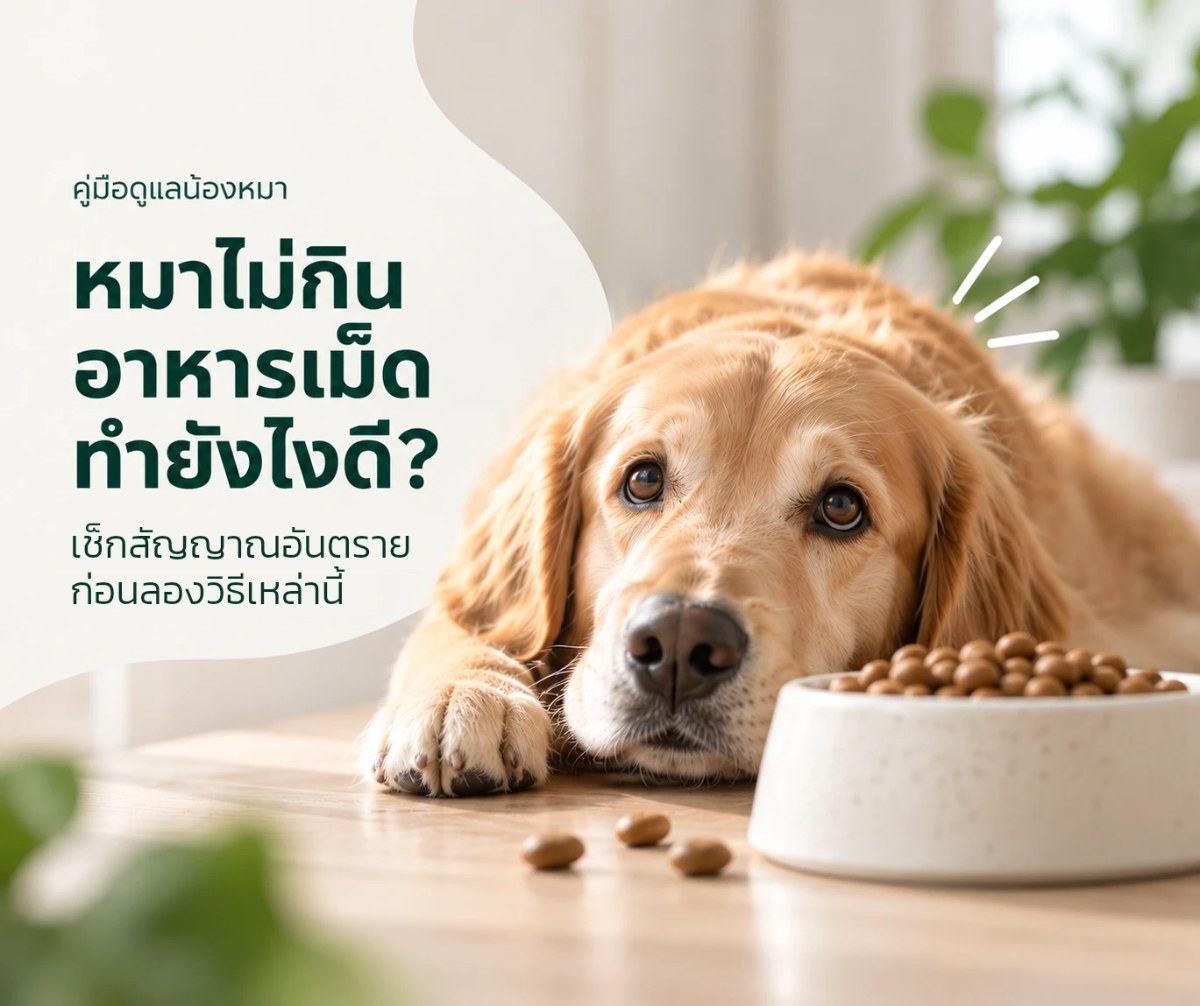
Dog Won’t Eat Kibble? Check for Warning Signs First, Then Try These Tips
You pour food into the bowl, and your dog just sniffs it and walks away. As a pet parent, that can feel really worrying.
A dog that won’t eat kibble may just be picky, or it may be a sign that your dog isn’t feeling well. This article helps you tell the two apart, then walks you through simple things you can try at home.
Check first: signs it’s time to see a vet
Before you decide your dog is just picky, check for these signs first. If you see any one of them, please talk to your vet.
- No food for 12–24 hours. Even if your dog seems fine, call your vet for advice.2
- Not eating, plus vomiting or diarrhea. Contact your vet right away.
- Dull, tired, or not wanting to move, along with not eating.
- Wants to eat but can’t. For example, picking up food and dropping it, chewing on one side, or drooling. This may come from a problem in the mouth or teeth, or from pain.
Puppies need help sooner
If a puppy skips more than one meal, take them to the vet straight away.
Toy-breed puppies can develop low blood sugar in their first 6 months, because their liver is not fully developed yet. If your puppy is shaking, very drowsy, wobbly on their feet, or having a seizure, go to an animal hospital immediately.
Picky or unwell? How to tell the difference
Loss of appetite can have many causes: illness, stress, a change of surroundings, or simply food your dog doesn’t like.
It may just be picky eating if…
- Your dog is still cheerful and playful, drinks normally, and poops and pees normally.
- Your dog refuses kibble but still eagerly begs for treats or human food.
Talk to your vet if…
- Your dog used to eat the same food well, then suddenly stopped.
- Your dog is eating less and less, or their eating habits have clearly changed.
Before deciding your dog is picky, have a vet check for any health causes first. Once the vet says your dog is healthy, try the tips below.
8 ways to help a picky dog
1. Feed at set times, and stop leaving food out all day
Leaving food out all day (free-feeding) is not recommended.
Try feeding meals at the same times every day. Leave the bowl down for a short time only, then pick it up. Most adult dogs do well with at least 2 meals a day.
If your dog is healthy, there’s no need to panic over one missed meal. Just wait for the next one.
2. Cut back on treats and table food
All treats and toppers together should make up no more than 10% of your dog’s daily calories.
If your dog is already full of treats, it’s no surprise they ignore their kibble. And some human foods are not safe for dogs either (see our article on human foods that may be toxic).
3. Don’t switch foods too often
Switching back and forth between foods may make your dog even pickier. Once you find a flavor and texture your dog likes, stick with it.
4. Change dog food gradually
If you need to change your dog’s food, do it slowly. A sudden switch may upset your dog’s stomach, and your dog may not want to eat the new food.
Make the change over about 7 days, starting with 25% new food and increasing it step by step.3 The table below shows an example schedule.
If your dog has loose stools, vomits, or eats less, slow the change down.
| Day | Old food | New food |
|---|---|---|
| 1–2 | 75% | 25% |
| 3–4 | 50% | 50% |
| 5–6 | 25% | 75% |
| 7 onward | 0% | 100% |
Keep an eye on your dog’s poop during this time. If your dog vomits or has diarrhea, talk to your vet. (Our article on dog poop colors can help too.)
5. Warm the food or add a topper
A good smell can win your dog’s interest. Try warming the food to near body temperature, about 38°C.1 Always test it before serving, and don’t let it get too hot.
Another option is to add plain, low-sodium broth, or a little wet food as a topper. ⚠️ The broth must never contain onion or garlic, because they are toxic to dogs.
If you use ready-made broth, read the ingredients on the label first.
If you’d like an easy helper, try Deserve Meal Booster, a powder you sprinkle on food, for dogs aged 3 months and up. Don’t forget to count it in the 10% treat allowance.
6. Reduce stress, and give each dog its own eating spot
Stress and changes in surroundings can make your dog lose interest in food.
In homes with several pets, use separate bowls and separate feeding areas. This also lets you see right away which one is eating less.
7. Get some exercise before meals
A walk or some playtime before meals may help your dog feel hungrier. A food puzzle toy can also make mealtime more fun.
8. Keep kibble fresh
When kibble is exposed to heat or moisture, the fats in it may go rancid and the nutrients may break down.
- Keep the food in its original bag, squeeze out the air, and seal it tightly.
- If you use a container, put the whole bag inside an airtight box.
- Store it indoors in a cool, dry place, at no more than about 27°C.
- Once opened, use it up within 2–3 months.
- Choose a bag size that suits your dog, and don’t buy a bag so big your dog can’t finish it in time.
Summary
When your dog won’t eat kibble, always check for warning signs first. No food for 12–24 hours, vomiting, diarrhea, low energy, or trouble eating means you should talk to your vet. Puppies should not wait longer than one missed meal.
If the vet confirms your dog is healthy, try feeding at set times, cutting back on treats, changing food slowly, warming the food or adding a topper, giving your dog its own eating spot, and keeping the food fresh. Be patient.
Most dogs adjust little by little.
Frequently asked questions (FAQ)
My dog hasn’t eaten for a day. Is that dangerous?
If your dog hasn’t eaten for 12–24 hours, call your vet for advice, even if they seem fine. If there is also vomiting or diarrhea, contact your vet right away.
My puppy won’t eat. Should I wait?
No, don’t wait. If a puppy skips more than one meal, take them to the vet straight away.
My dog won’t eat kibble but eats treats. What should I do?
Keep treats to no more than 10% of daily calories, and feed at set times instead of leaving food out all day.
How many days does it take to change dog food?
About 7 days, slowly increasing the share of new food. If your dog has a sensitive stomach, it may take longer.
Can I soak kibble in warm water?
Yes. Try warming the food to near body temperature, or add low-sodium broth with no onion or garlic. If your dog doesn’t finish, pick up the bowl after the meal.
References: VCA Animal Hospitals, American Kennel Club, AAHA, Tufts University, Merck Veterinary Manual, ASPCA