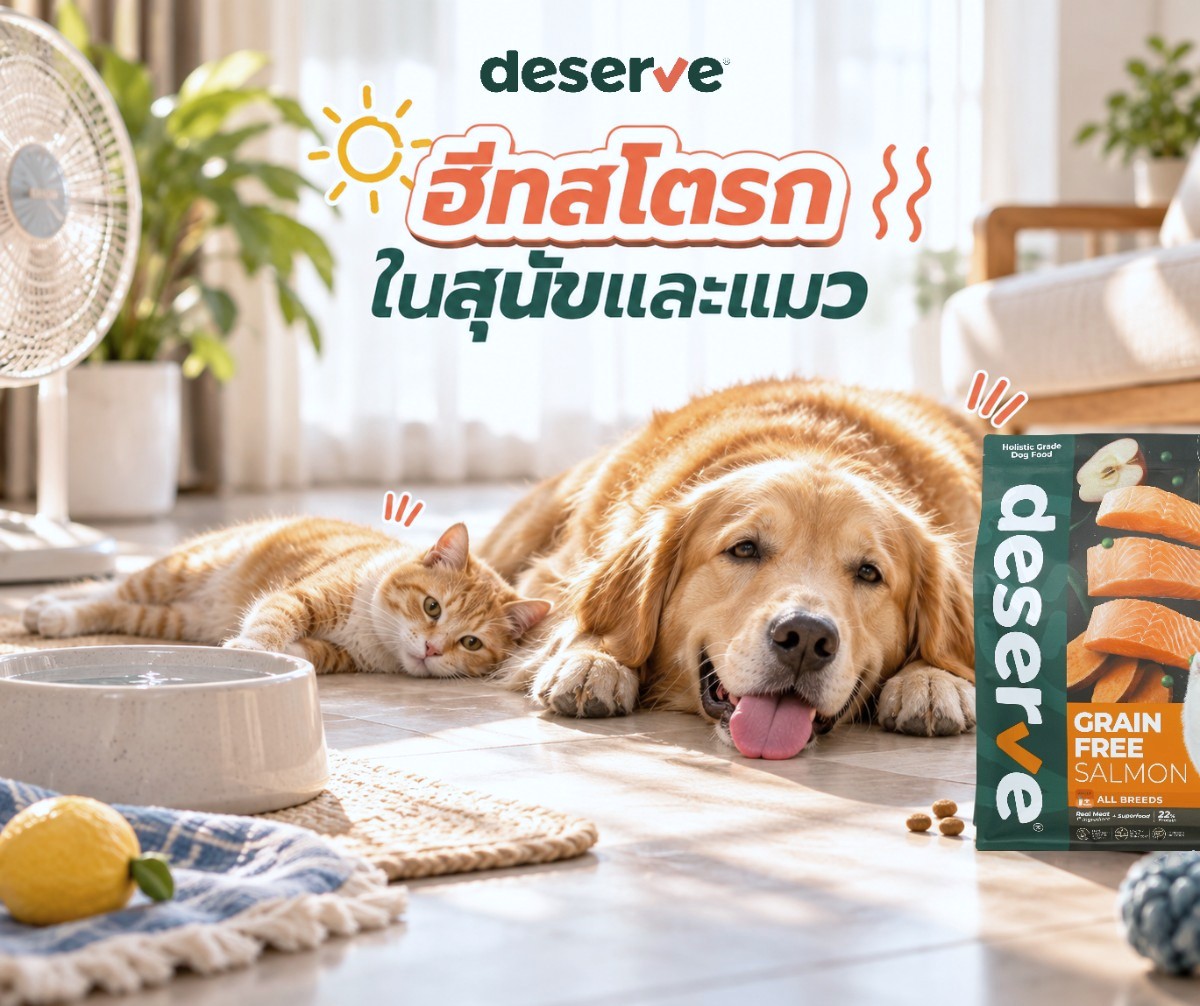
Heatstroke in Dogs and Cats: A Silent Hot-Season Danger Pet Parents Must Not Ignore
When the hot season starts, the scariest thing for pet parents isn’t just a picky eater or a pet off their food. It’s heatstroke in dogs and cats, an emergency that can be fatal if help comes too late. Today, let’s get to know its causes, how to spot the signs, and how to lower the risk the right way, so your pet stays safe in any weather.

Why does heatstroke happen so easily in dogs and cats?
Heatstroke happens mainly when your pet’s body builds up too much heat (a body temperature above 39.4°C is abnormal, and in heatstroke it often reaches about 41°C) and can’t release it fast enough. Dogs and cats don’t have sweat glands all over their skin like people do, so dogs cool down mainly by panting, as they have only a few sweat glands in their paw pads. Cats also have sweat glands between their paw pads, but they don’t usually pant to cool down; a panting cat may be stressed or overheating.
Risk factors to watch out for
- Being in a stuffy, humid place, in direct sun, or in a car with the engine off
- Running around or lying outdoors in strong midday sun
- Flat-faced breeds (such as Pugs, Bulldogs, and Persian cats), which have a harder time cooling down by panting

Warning signs and first aid
If you notice your dog or cat panting heavily, drooling a lot, with dry, sticky or abnormally colored gums (such as bright red), or walking unsteadily, move them into the shade right away. Pour or wipe cool or room-temperature water over the head, stomach, armpits and feet and use a fan, but don’t leave a wet cloth covering the body (avoid ice and ice-cold water, as they may cause shock), and get them to a vet as quickly as possible.

Lower the risk of heatstroke by being prepared, the Deserve way
We believe a pet’s happiness starts with thoughtful care. The key to lowering heatstroke risk is to keep your pet’s body “cool” and “well hydrated” at all times: give them shade and water, avoid walks in the hottest part of the day, and never leave them in a car.
Bring water everywhere with the “Deserve Happy Paws All-in-One Bottle, an insulated water bottle with a treat compartment that helps your pet enjoy drinking water.” Letting your pet take small sips often during the day is very important. A pet water bottle that works with just one button lets you give your pet water anywhere, whether you’re walking in the park or sitting in the car.

Caring for your dog or cat in the hot season isn’t hard once you understand the causes and have the right gear ready. An insulated water bottle for dogs and cats, along with other travel essentials, helps you and your pet live together happily and safely on every trip. Because your pet’s safety is at the heart of Deserve Petcare.
Read more: Tips to Help Your Cat Drink More Water, with Real Meat Meal Booster · “Delicious” Human Foods That May Be “Poison” for Dogs and Cats
🛒 Order Deserve products right here on this website, or message us on LINE @deserve.petcare
Frequently asked questions
What are the signs of heatstroke in dogs?
Signs include fast breathing or panting, dry or sticky gums, changes in gum color, lethargy, disorientation, heavy drooling, vomiting, loss of coordination and possibly seizures. Heatstroke is an emergency; get to a vet quickly.
Is it dangerous if my cat is panting?
Cats don’t usually pant to cool down the way dogs do. Panting in a cat can be a sign of stress or overheating, and cats can get heatstroke too, so move your cat somewhere cool and take it to a vet.
What first aid should I give a dog with heatstroke?
Move the dog out of the heat into shade or indoors, pour cool (not cold or iced) water over the head, stomach, armpits and feet, and use a fan, then get to a vet as soon as possible. Never use ice or cold-water immersion, as it can cause shock.
Can I leave my dog in the car for just a minute?
You shouldn’t. Leaving a dog in a poorly ventilated car is the most common cause of heatstroke; body temperature can rise within minutes, and a parked car can heat up a lot even on a fairly cool day.
References: VCA Animal Hospitals, Virginia-Maryland College of Veterinary Medicine (Virginia Tech)