What Your Dog’s Poop Color Says About Their Health
Have you ever noticed your dog’s poop changing color? Don’t ignore it! Your dog’s poop color may be a warning sign about their health, from simple indigestion all the way to serious illness. Let’s decode your dog’s poop together!
1. What does dog poop color tell you?
Watching the color of your dog’s poop can help you tell whether your dog is healthy. Here are the colors to look for and what each one means.
🟤 Normal brown poop
✅ This is the color you want to see every day! It means your dog is eating well and their digestion is working normally.
🟡 Yellow poop
⚠️ This may come from a change of food, or from a problem with the liver or gallbladder. Watch for other signs too, such as tiredness or vomiting.
🟢 Green poop
⚠️ Your dog may have eaten grass or something green, but if green poop keeps coming back for several days, watch for other signs too. If your dog often has loose stools, talk to your vet.
🔴 Red poop
⚠️ If there is bright red blood in it, it may come from colitis (inflammation of the large intestine), which can be caused by stress, parasites or an allergy to a dietary protein, or from a wound or infection in the intestines. Take your dog to the vet right away!
⚫ Black poop
⚠️ Black, tarry poop may be a sign of bleeding in the stomach or small intestine. See a vet urgently.
⚪ White or gray poop
⚠️ This may come from trouble digesting fat, for example when the pancreas doesn’t make enough digestive enzymes (EPI), which often causes large amounts of pale, fatty poop, or it may be linked to a liver or gallbladder problem, so talk to your vet. White poop is sometimes also seen in dogs that eat a lot of bone.
2. What causes diarrhea in dogs?
If your dog has diarrhea, it may be caused by:
- A sudden change of food
- An allergy to certain foods (common culprits in dogs include beef, dairy, chicken and wheat)
- A bacterial or viral infection, such as parvovirus (parvo), a serious illness in puppies
- Stress or anxiety, for example after moving house or a change of surroundings
🔍 Other signs to watch for
Besides diarrhea, check whether your dog has any other signs, such as:
- Diarrhea several times in the same day
- Poop with an unusually bad smell
- Mucus or blood in the poop
- Low energy, not playful, eating less
- Vomiting as well
If you see these signs, take your dog to the vet quickly, as they may point to a serious digestive illness.
🏥 What to do when your dog has diarrhea
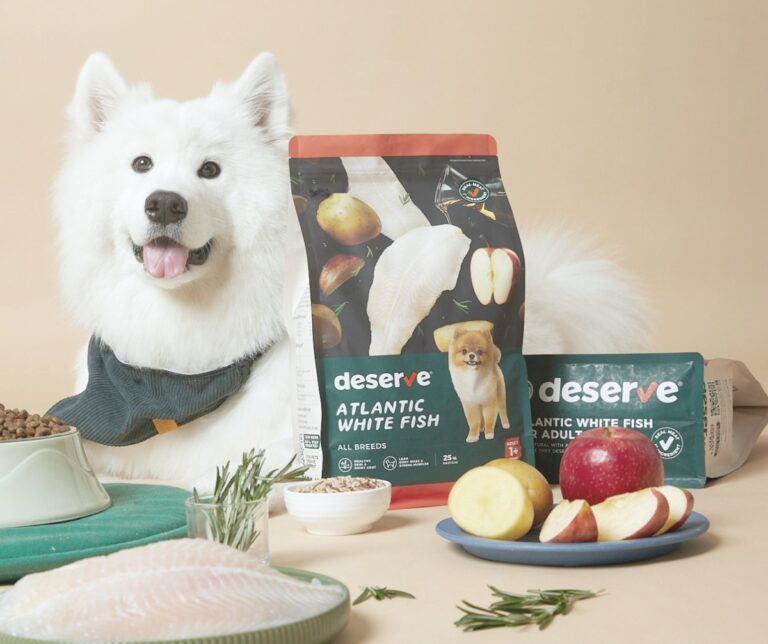
💡 Feed small amounts of an easy-to-digest food as your vet advises, and avoid sudden food changes. If you switch recipes, for example to Deserve Holistic Grain Free Dog Food, made with real meat as the first ingredient and grain-free, do it gradually.
💡 Ask your vet about probiotics, which vets may recommend for dogs with diarrhea. 💡 Stop treats and foods that may trigger reactions, especially table scraps or foods with lots of additives.
💡 Always give easy access to clean water, because a dog with diarrhea can quickly become dehydrated. If you use an electrolyte drink, choose one made for pets and follow your vet’s advice.
💡 If diarrhea lasts more than 2 days, or comes with other signs, talk to your vet right away.
3. Why does my dog’s poop smell so bad?
Ever had to hold your breath while picking up after your dog because the smell was just too strong? In fact, the smell of your dog’s poop can tell you more about their inner health than you might think! Let’s look at why dog poop can smell so bad, and what you can do about it.
🔍 Why your dog’s poop smells worse than usual
- What your dog eats: Low-quality or hard-to-digest food, including poorly digestible protein, may cause gas and a strong smell.
- Poor digestion: Sometimes your dog’s gut can’t absorb nutrients well, so food ferments and smells bad.
- Worms and bacteria in the gut: Some bacterial infections or worms may make poop smell unusually bad.
- More protein than needed: Lab research found that high-protein diets, and especially poorly digestible protein, lead gut bacteria to make more smelly compounds such as ammonia.
✅ How to reduce poop smell
💡 Choose food with high-quality, easy-to-digest protein, such as Deserve Holistic Grain Free Dog Food, made with real meat and no by-products.
💡 Feed a diet with the right amount of fiber, not too much or too little, and ask your vet before adding fiber supplements.
💡 Ask your vet about probiotics; a study in dogs found that certain probiotics (Bacillus subtilis and B. licheniformis) made poop less smelly.
💡 Cut back on high-fat snacks, such as dog treats with lots of additives or scraps from the table.
💡 Make sure your dog drinks enough clean water, to keep digestion and bowel movements normal.
4. Foods that help your dog’s digestion
Food that suits your dog and is easy to digest may help their digestion work better, with less diarrhea and less smelly poop. Deserve Holistic Grain Free Dog Food is one option, made with real meat as the first ingredient and no grains.
🌟 What to look for in a food that supports gut balance
- Protein from real meat
- No grains (grain-free)
- Contains prebiotics and probiotics
- Contains fiber
- Contains yucca extract
Read more: Understanding IBD in Dogs and Cats · Dog Won’t Eat Kibble? Check for Warning Signs First, Then Try These Tips
🛒 Order Deserve products right here on this website, or message us on LINE @deserve.petcare
Frequently asked questions
Is black dog poop dangerous?
Black, tarry stool may be a sign of bleeding in the stomach or small intestine, so don’t wait and see; take your dog to a vet promptly.
What causes bright red blood in a dog’s poop?
Small amounts of bright red blood near the end of a bowel movement are often seen with colitis (inflammation of the large intestine), which can be caused by stress, parasites or an allergy to a dietary protein. If the diarrhea is severe and bloody or the dog seems ill in other ways, see a vet right away.
How many days of diarrhea before I should take my dog to the vet?
If frequent loose stools last more than two days, see a vet; if there is blood, vomiting or weakness, go right away, because a dog with diarrhea can quickly become dehydrated.
Can stress give my dog diarrhea?
Yes. Stress, for example after travel, boarding or a move, is a common cause of diarrhea in dogs, especially stress colitis. If it does not improve within two days or there is blood, see a vet.
References: Merck Veterinary Manual, VCA Animal Hospitals